In the heart of Hong Kong's bustling art district, an extraordinary exhibition is challenging conventional perceptions of calligraphy and embodiment. Body as Brush: The Hong Kong 'Body Calligraphy' Exhibition presents a groundbreaking fusion of ancient Chinese artistic tradition with cutting-edge motion capture technology, creating an immersive experience where human movement becomes the fundamental medium for creating three-dimensional calligraphic forms.
The exhibition represents a significant departure from traditional ink-and-brush calligraphy, instead transforming the entire human body into a living, breathing calligraphy instrument. Visitors witness dancers and performers creating elaborate Chinese characters through carefully choreographed movements, their gestures captured by sophisticated motion-sensing equipment that translates physical motion into stunning digital calligraphy. This innovative approach not only preserves the spiritual essence of traditional calligraphy but also pushes the boundaries of what constitutes artistic expression in the digital age.
At the core of the exhibition lies a sophisticated technological infrastructure that would appear more at home in a film studio than an art gallery. Multiple high-resolution infrared cameras track performers' movements with millimeter precision, while inertial measurement units capture the subtle rotations and accelerations of different body parts. The data streams converge in real-time processing systems that interpret the spatial trajectories of limbs and torso as brushstrokes, complete with variations in pressure and velocity that mimic traditional ink techniques.
The artistic director, renowned new media artist Dr. Chen Wei-Ling, explains the philosophical underpinnings of the project. "In traditional calligraphy, the brush becomes an extension of the calligrapher's body and spirit. We've simply reversed this relationship - now the body itself becomes the brush, and technology becomes the medium through which we capture its essence. This creates a more direct connection between the artist's physical presence and the resulting artwork."
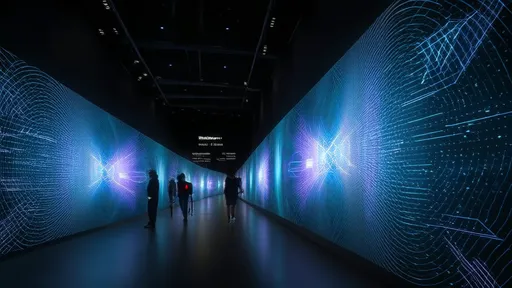
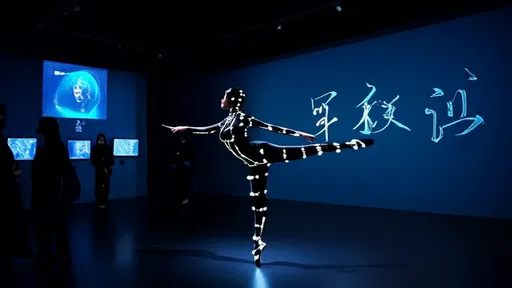
Visitors to the exhibition first encounter the "Motion Capture Studio," where they can observe live performances throughout the day. Dancers clad in sensor-equipped suits move through a specially designed performance space, their movements simultaneously rendered as elegant calligraphic forms on massive high-definition screens. The transformation from physical gesture to digital brushstroke happens instantaneously, creating a mesmerizing spectacle that blurs the lines between dance, technology, and visual art.
One of the most striking installations, titled "The Dancing Character," features a solo performer creating the complex character for "dragon" through a series of flowing, powerful movements. As the dancer twists and turns through space, the motion capture system translates each gesture into corresponding brushstrokes, with the thickness and opacity of each stroke varying according to the speed and force of the movement. The resulting character appears to materialize in three-dimensional space, rotating slowly to reveal its intricate structure from every angle.
The technological achievement extends beyond mere visual representation. Advanced algorithms analyze the quality of movement - its fluidity, rhythm, and energy - and translate these characteristics into corresponding calligraphic attributes. A sharp, abrupt movement might produce a dry brush effect, while a slow, continuous motion creates the smooth, saturated strokes characteristic of wet ink calligraphy. This attention to the nuances of traditional technique demonstrates the developers' deep understanding and respect for the art form they're reinterpreting.
Educational components form an integral part of the exhibition, with interactive stations allowing visitors to experiment with basic body calligraphy themselves. Using simplified motion tracking technology, participants can create their own simple characters through movement, gaining firsthand understanding of the relationship between physical gesture and calligraphic form. These interactive elements have proven particularly popular with younger visitors, introducing them to Chinese calligraphy through a medium that feels native to their technology-saturated generation.
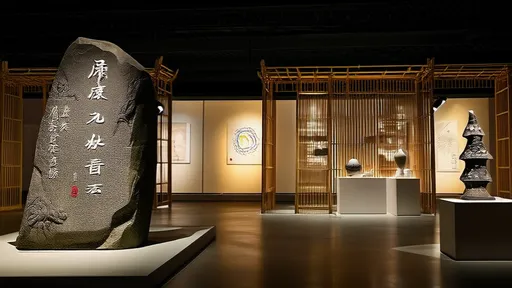
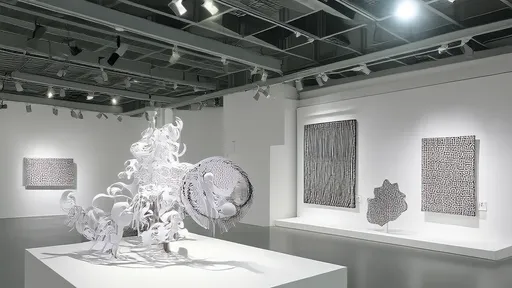
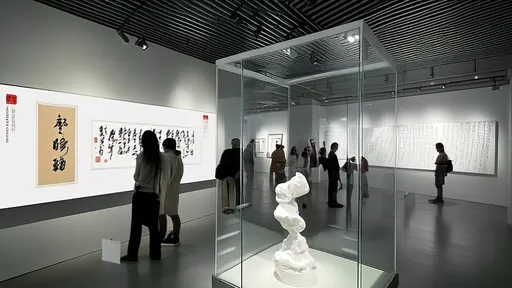
The exhibition also features a historical section that contextualizes this innovative approach within the broader tradition of Chinese calligraphy. Rare manuscripts and historical artifacts illustrate how calligraphic tools and techniques have evolved over centuries, from oracle bone inscriptions to modern brushwork. This historical perspective helps visitors appreciate the revolutionary nature of body calligraphy while understanding its roots in centuries of artistic practice.
Critics and art historians have responded with enthusiasm to this novel approach. Professor James Richardson of the Hong Kong Art Institute notes, "What makes this exhibition particularly significant is how it manages to honor tradition while simultaneously subverting it. The artists have maintained the spiritual and meditative qualities central to calligraphic practice while completely transforming its physical execution. This represents exactly the kind of innovation that keeps traditional art forms vital and relevant."
Beyond its artistic merits, the exhibition raises fascinating questions about embodiment and technology in contemporary art practice. The very notion of what constitutes the "artist's hand" undergoes radical reinterpretation when the entire body becomes the creative instrument. This challenges traditional hierarchies that privilege fine motor skills of the hand over broader bodily movements, suggesting a more holistic understanding of artistic creation.
The technical team behind the exhibition spent nearly two years developing the sophisticated software that translates motion into calligraphy. Lead developer Michael Tan explains some of the challenges: "The most difficult aspect was capturing the essence of brushwork - the way pressure affects stroke width, the subtle variations in ink density, the energy and rhythm that distinguish masterful calligraphy. We had to develop entirely new algorithms that could interpret bodily movement in terms of these traditional qualities."
International interest in the exhibition has been substantial, with several major museums already negotiating to host the show in cities including London, New York, and Tokyo. The global appeal lies in its unique combination of distinctly Chinese cultural heritage with universally accessible technological innovation. Even viewers with no background in Chinese calligraphy can appreciate the beauty of the transforming movements and the technological achievement they represent.
Looking toward the future, the exhibition's creators envision numerous applications for body calligraphy beyond the art world. Potential uses include therapeutic applications for physical rehabilitation, innovative approaches to dance notation, and new forms of human-computer interaction. The technology could even influence character input methods for digital devices, potentially creating more intuitive ways to write Chinese characters using gesture rather than keyboards.
The exhibition represents a significant moment in the ongoing dialogue between traditional art forms and digital technology. Rather than simply using technology to reproduce traditional effects, the artists have allowed the capabilities of new technologies to fundamentally reshape the creative process itself. This approach demonstrates how digital tools can inspire genuinely new artistic forms rather than merely serving as novel delivery systems for established practices.
As visitors move through the exhibition spaces, they encounter not just individual artworks but an entire ecosystem of creativity where technology, tradition, and human movement converge. The experience challenges conventional categories and invites viewers to reconsider their understanding of both calligraphy and the human body's creative potential. In an age increasingly dominated by virtual experiences, the exhibition grounds digital art firmly in physical presence, reminding us that even the most advanced technology ultimately serves human expression.
The success of Body as Brush suggests a promising direction for the preservation and evolution of traditional art forms in the digital age. By finding innovative ways to translate ancient practices into contemporary media, artists can ensure their continued relevance while introducing them to new audiences. This exhibition demonstrates that tradition and innovation need not exist in opposition but can instead combine to create something truly extraordinary.
As the exhibition continues to draw crowds and critical acclaim, it stands as a powerful testament to Hong Kong's position at the intersection of Eastern and Western cultural currents. The city's unique blend of technological sophistication and cultural heritage provides the perfect context for such boundary-pushing artistic experiments. Body as Brush not only showcases the creative potential of this cultural convergence but also points toward exciting new directions for artistic practice in the twenty-first century.
By William Miller/Oct 27, 2025
By /Oct 27, 2025
By /Oct 27, 2025
By /Oct 27, 2025
By Rebecca Stewart/Oct 27, 2025
By /Oct 27, 2025
By /Oct 27, 2025
By /Oct 27, 2025
By /Oct 27, 2025
By /Oct 27, 2025
By Samuel Cooper/Oct 27, 2025
By /Oct 27, 2025
By /Oct 27, 2025
By /Oct 27, 2025
By /Oct 27, 2025
By /Oct 27, 2025
By /Oct 27, 2025
By /Oct 27, 2025
By /Oct 27, 2025
By /Oct 27, 2025
