In the heart of Hangzhou, a city celebrated for its poetic landscapes and historic canals, the 2024 Hangzhou Biennale unfolds under the evocative theme "Conjecture: Ecological Reconstruction." This ambitious exhibition, set against the backdrop of West Lake's timeless beauty, dares to envision a future where art and ecology merge to redefine our relationship with the natural world. Curated as a profound dialogue between human creativity and environmental consciousness, the Biennale presents a tapestry of speculative futures, challenging visitors to reconsider the very fabric of ecological harmony.
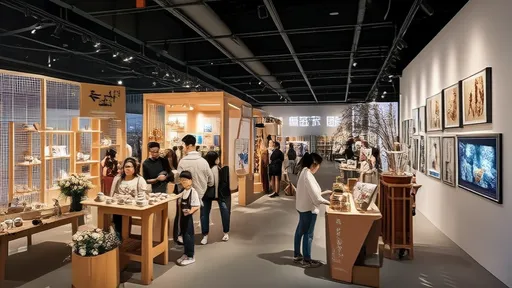
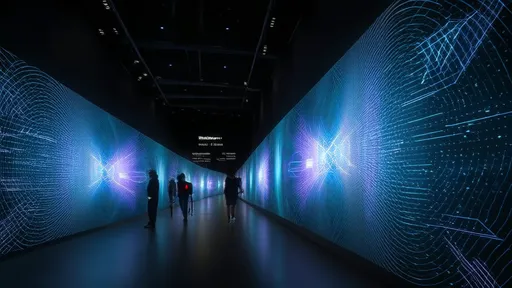
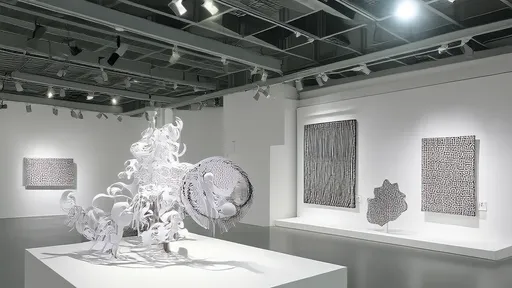
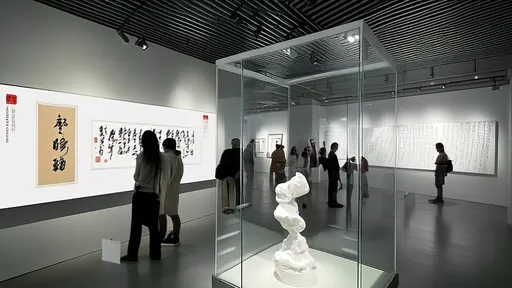
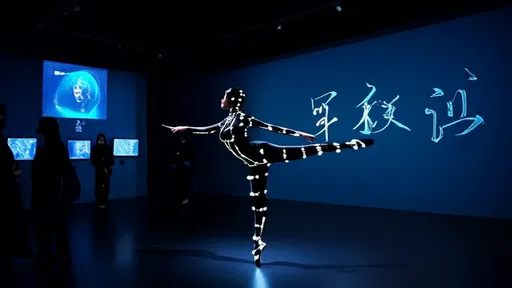
As I wandered through the exhibition halls, the air thick with the scent of damp earth and digital projections, I was struck by the sheer diversity of voices echoing through the installations. From sprawling multimedia pieces that mimic forest ecosystems to intimate sculptures crafted from reclaimed industrial waste, each work serves as a testament to the curatorial vision: to foster a collective reimagining of our planet's destiny. The Biennale isn't merely an art show; it's a living laboratory where artists, scientists, and philosophers converge to probe the boundaries of sustainability. In one corner, a kinetic installation powered by solar energy hums softly, its movements mirroring the rhythms of migratory birds, while in another, virtual reality headsets transport viewers to digitally reconstructed wetlands, blurring the lines between the tangible and the imagined.
The theme of "ecological reconstruction" resonates deeply in an era marked by climate uncertainty and technological acceleration. Here, reconstruction isn't portrayed as a return to some idealized past but as a dynamic, often contentious, process of co-creation. Artists like Li Wei, whose series "Symbiotic Ruins" incorporates biodegradable materials and AI-generated soundscapes, argue that the future demands a fusion of organic and synthetic intelligence. His work, a labyrinth of growing moss and flickering LEDs, invites viewers to contemplate a world where decay and regeneration are inseparable partners. Similarly, the collective "Eco-Vanguard" presents a provocative installation titled "Breathing Concrete," where living algae breathe life into urban structures, suggesting that cities of tomorrow could pulse with biological vitality.
What sets this Biennale apart is its refusal to offer easy answers. Instead, it embraces conjecture—the fertile ground of hypothesis and doubt—as a catalyst for innovation. In the "Chamber of Speculative Botany," visitors encounter hybrid plants engineered to thrive in polluted soils, their vibrant colors a stark contrast to the grim realities of environmental degradation. These aren't just artistic fantasies; they are grounded in rigorous research, with many collaborations involving botanists from local universities. The interplay of art and science here feels organic, as if the two disciplines have always been destined to collaborate in the quest for planetary healing.
Yet, amidst the optimism, there's an undercurrent of urgency. Installations like "Vanishing Points" by Maria Chen, which uses data visualization to map the rapid loss of global biodiversity, serve as sobering reminders of the stakes involved. Chen's work, a sprawling network of threads that gradually unravels over the course of the exhibition, mirrors the fragile interconnectedness of ecosystems on the brink. It's a poignant metaphor for the precarity of life in the Anthropocene, urging viewers to move beyond passive observation and toward active stewardship.
The Biennale also delves into the cultural dimensions of ecological renewal, exploring how indigenous knowledge and digital futures can intersect. In the "Ancestral Algorithms" pavilion, traditional weaving patterns from ethnic minorities are reimagined through generative code, creating textiles that tell stories of resilience and adaptation. This fusion of heritage and innovation highlights a crucial insight: that ecological reconstruction must honor diverse worldviews to be truly transformative. As one curator noted in an informal discussion, "Sustainability isn't a monolithic concept; it's a mosaic of practices, each rooted in its own history and horizon."
Critics might argue that such exhibitions risk aestheticizing crisis, turning existential threats into objects of contemplation. However, the Hangzhou Biennale deftly navigates this pitfall by embedding interactivity at its core. Visitors aren't just spectators; they're invited to contribute to evolving artworks, such as a communal mural where pigments derived from local plants change color in response to air quality sensors. This participatory approach transforms the gallery into a microcosm of collective action, reinforcing the idea that ecological renewal begins with small, deliberate gestures.
As the Biennale draws to a close, its legacy lingers in the conversations it has sparked—in cafes, academic circles, and online forums. It has succeeded in framing ecology not as a niche concern but as a central narrative of our time, one that demands creativity as much as conservation. The artworks, though diverse in form, share a common thread: a belief in the power of human ingenuity to forge new paths amid uncertainty. In the words of lead curator Dr. Zhang Ming, "We are not just forecasting the future; we are planting seeds of possibility, hoping they will take root in the imagination of generations to come."
Ultimately, the Hangzhou Biennale's greatest achievement lies in its ability to balance hope with humility. It doesn't promise a utopian tomorrow but offers a space to grapple with the complexities of coexistence. As I left the venue, the setting sun casting long shadows over the lake, I felt a renewed sense of agency—a conviction that the future is not predetermined but shaped by the stories we dare to tell. In this age of conjecture, art becomes both a mirror and a map, reflecting our fears while charting courses toward resilience.
By William Miller/Oct 27, 2025
By /Oct 27, 2025
By /Oct 27, 2025
By /Oct 27, 2025
By Rebecca Stewart/Oct 27, 2025
By /Oct 27, 2025
By /Oct 27, 2025
By /Oct 27, 2025
By /Oct 27, 2025
By /Oct 27, 2025
By Samuel Cooper/Oct 27, 2025
By /Oct 27, 2025
By /Oct 27, 2025
By /Oct 27, 2025
By /Oct 27, 2025
By /Oct 27, 2025
By /Oct 27, 2025
By /Oct 27, 2025
By /Oct 27, 2025
By /Oct 27, 2025
